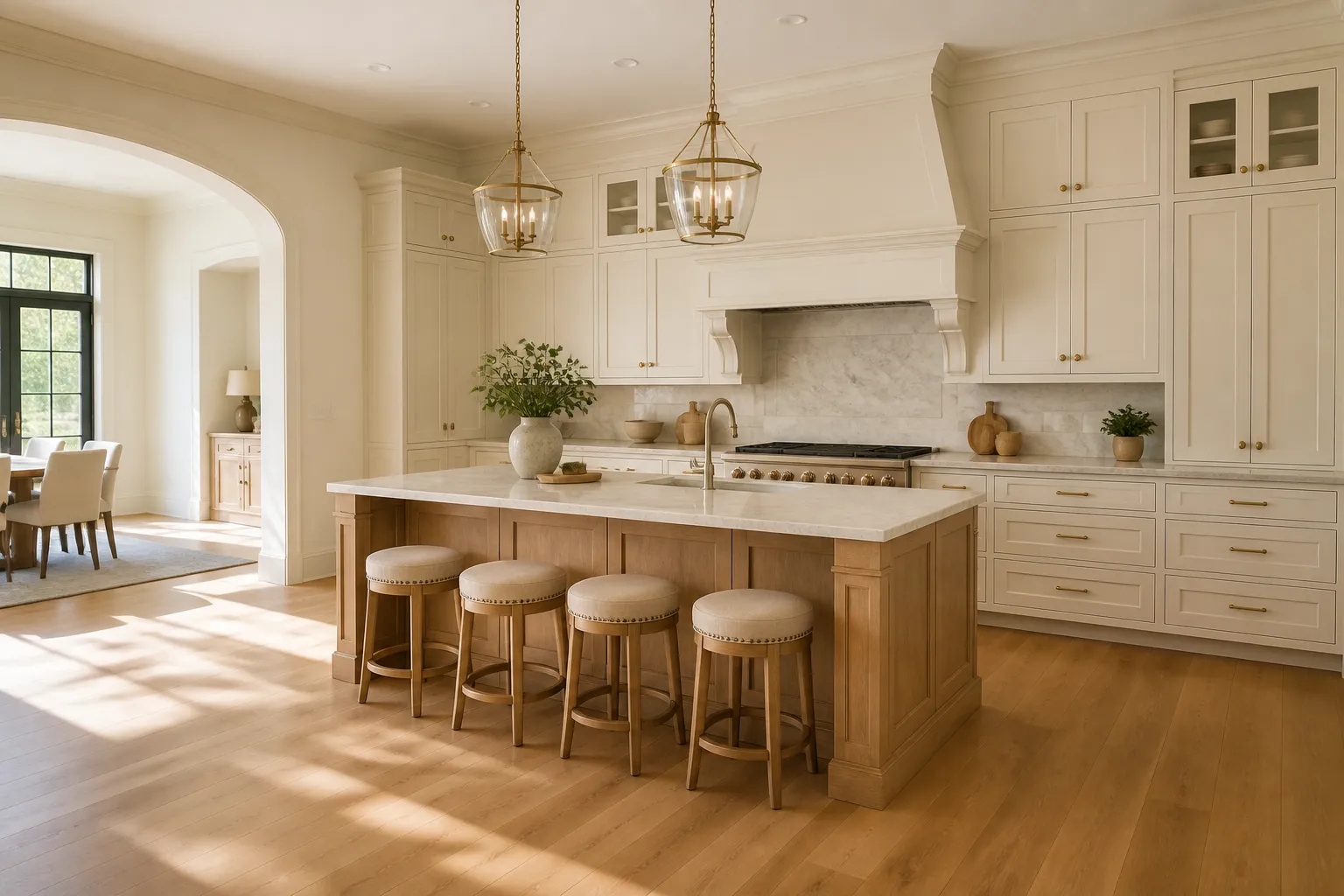
Madison Elite Cabinets works across all three cabinet tiers, and the question that opens most conversations is which one a house actually needs. The honest answer depends less on budget than on the walls.
The three tiers, briefly
Stock
Pre-built in fixed sizes, usually 3-inch increments, from a warehouse. Fast and cheap. Where they struggle is any wall that is not a multiple of 3 inches, which ends up filled with blank matching panel.
Semi-custom
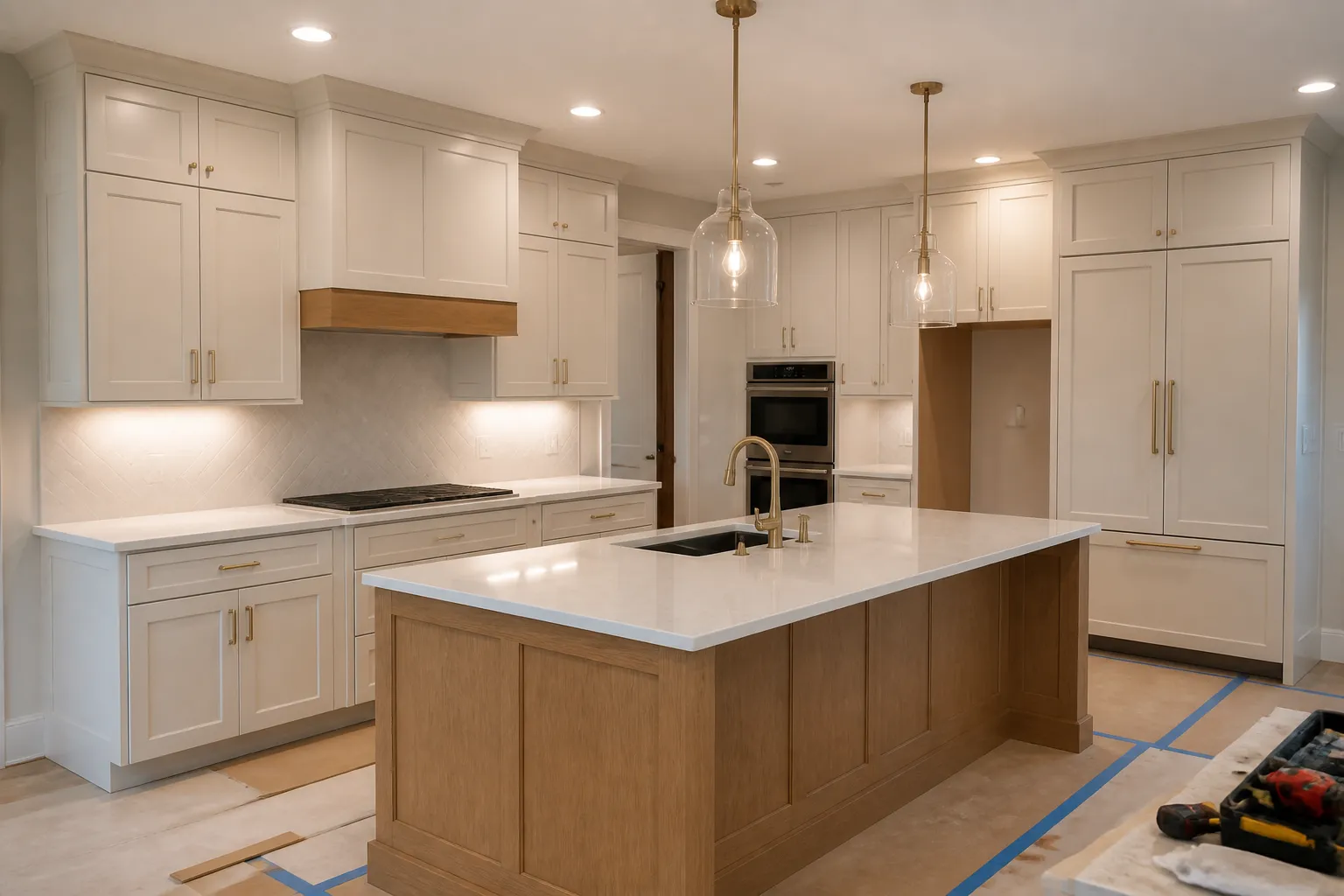
Standard boxes with real choices: door style, finish, interior fittings, some size modification. This is where most full kitchen remodels land and for a lot of Madison homes it is the sensible tier.
Custom
Built to your dimensions in your material. Worth it when the room has a genuine constraint, or when you want a species or finish nobody stocks.
Why Madison changes the answer
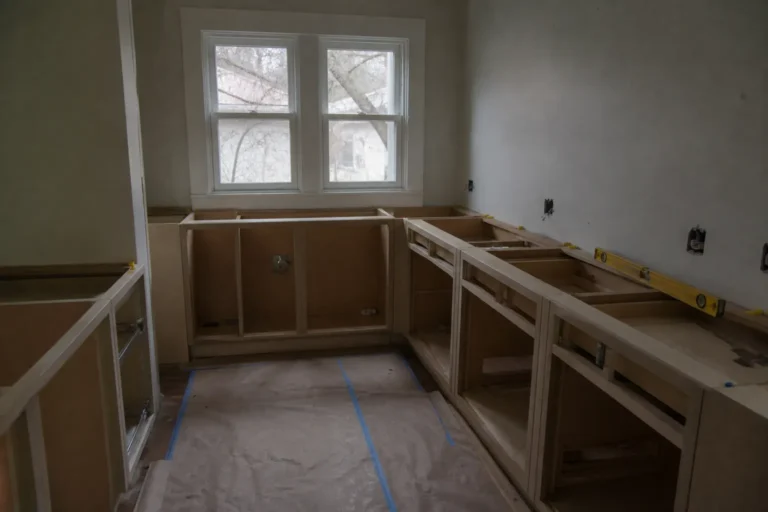
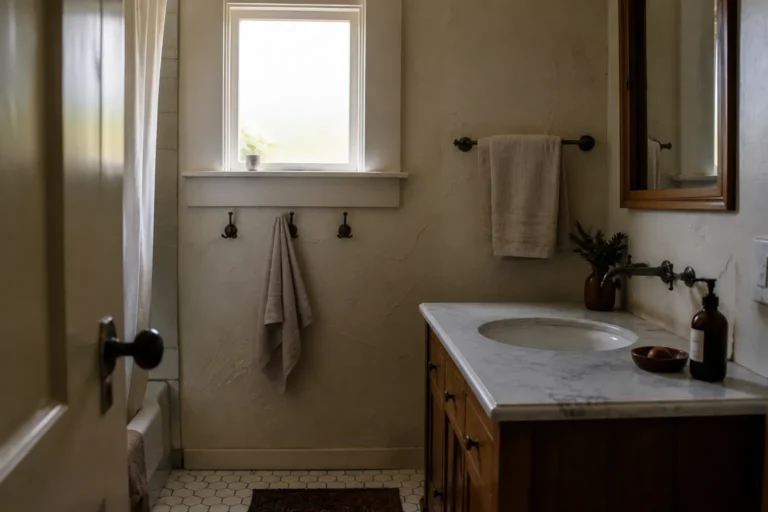
A good share of the housing stock here predates World War II. Bungalows, four-squares and Colonial Revivals around the isthmus and the older west side are well built and full of character, and almost nothing in them is square.
Ninety years of settling means floors slope, walls bow and corners are rarely 90 degrees. Half an inch of variation across a ten-foot run is ordinary. An inch is not unusual.
What that does to stock cabinets
Stock boxes assume a square room. In an old house they can still be installed, scribed and shimmed, but the filler strips multiply and the gaps show. You end up paying in wasted space what you saved on the boxes.
Where stock works fine
Newer homes in Sun Prairie, Verona, Waunakee and DeForest are generally square and built to standard dimensions. There, stock and semi-custom perform well and the price difference is real money saved.
Construction differences that matter
Tier is not the same as quality, and the marketing blurs this deliberately. What to actually check:
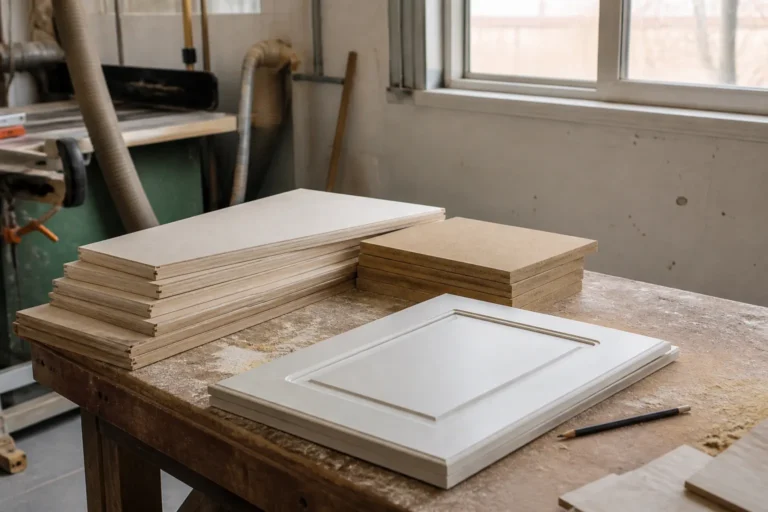
- Box material. Plywood carcase versus particleboard. This is the single biggest durability difference, and it cuts across all three tiers.
- Drawer boxes. Dovetailed plywood versus stapled particleboard with a flexing bottom.
- Slides and hinges. Full-extension soft-close on steel, versus plastic mechanisms.
- Finish coverage. Whether all six faces are finished, including backs and undersides.
A well-built semi-custom cabinet beats a poorly built custom one. Ask about these four things rather than the tier name.
Lead time
Stock can be days. Semi-custom is commonly four to eight weeks. Custom runs eight to twelve, sometimes longer for specialty finishes.
In Wisconsin that interacts with the season. A kitchen torn out in November with a twelve-week lead means no kitchen over the holidays. Worth planning backwards from when you want to be cooking again.
Humidity and what it does to each tier
Indoor humidity here swings from around 20 percent in January to above 60 in July. Solid wood panels move across that range. In a floating panel door that movement is designed in and harmless, though a thin unstained line can appear at a stained panel edge in midwinter.
Particleboard does not move so much as fail when it takes water. Under a sink, in a laundry or in a basement, that is the material to avoid regardless of tier. Our kitchen cabinets use plywood carcases for this reason.
A straightforward way to decide
- Is the house pre-war or visibly out of square? Lean semi-custom or custom.
- Are the wall lengths awkward, with no clean 3-inch fit? Semi-custom at minimum.
- Do you want a specific species, colour or an unusual height? Custom.
- Is the room square, standard and the budget tight? Stock is honest value.
- Whatever the tier, insist on plywood boxes and decent hardware.
What it means for fit
In an old house the install matters as much as the cabinets. Boxes have to be scribed to the walls and levelled independently of the floor, and counters templated after the cabinets are set rather than ordered from a drawing. Our cabinet installation page covers why that takes longer here.
If the boxes are sound and only the doors are dated, neither tier is the right spend. Refacing changes the look for a fraction of the cost.
Quality claims are easier to compare against a recognised standard. The ANSI/KCMA A161.1 certification programme tests structure, drawers, doors and finish to simulate a lifetime of use.
Common questions
Is custom always better quality?
No. Tier describes how the cabinet is sized, not how it is built. Check the box material and hardware instead.
Can I mix tiers in one kitchen?
Yes, and it is a good way to control cost. Stock or semi-custom on the straightforward runs, custom for the awkward corner or the island.
How much more does custom cost?
It varies with material and complexity more than with the tier label. Getting a quote on your actual layout is the only way to know.
Will stock cabinets fit an old Madison kitchen at all?
They will fit. The question is how much filler and wasted space you accept.
Which tier holds resale value?
Buyers respond to condition, layout and finish quality far more than to the tier the cabinets came from.
How do I start?
Send rough measurements and a photo of the room. We will tell you honestly which tier the house calls for.
Get an answer for your kitchen
We will measure, check how square the room actually is, and price the tiers side by side. Call (608) 665-1379.