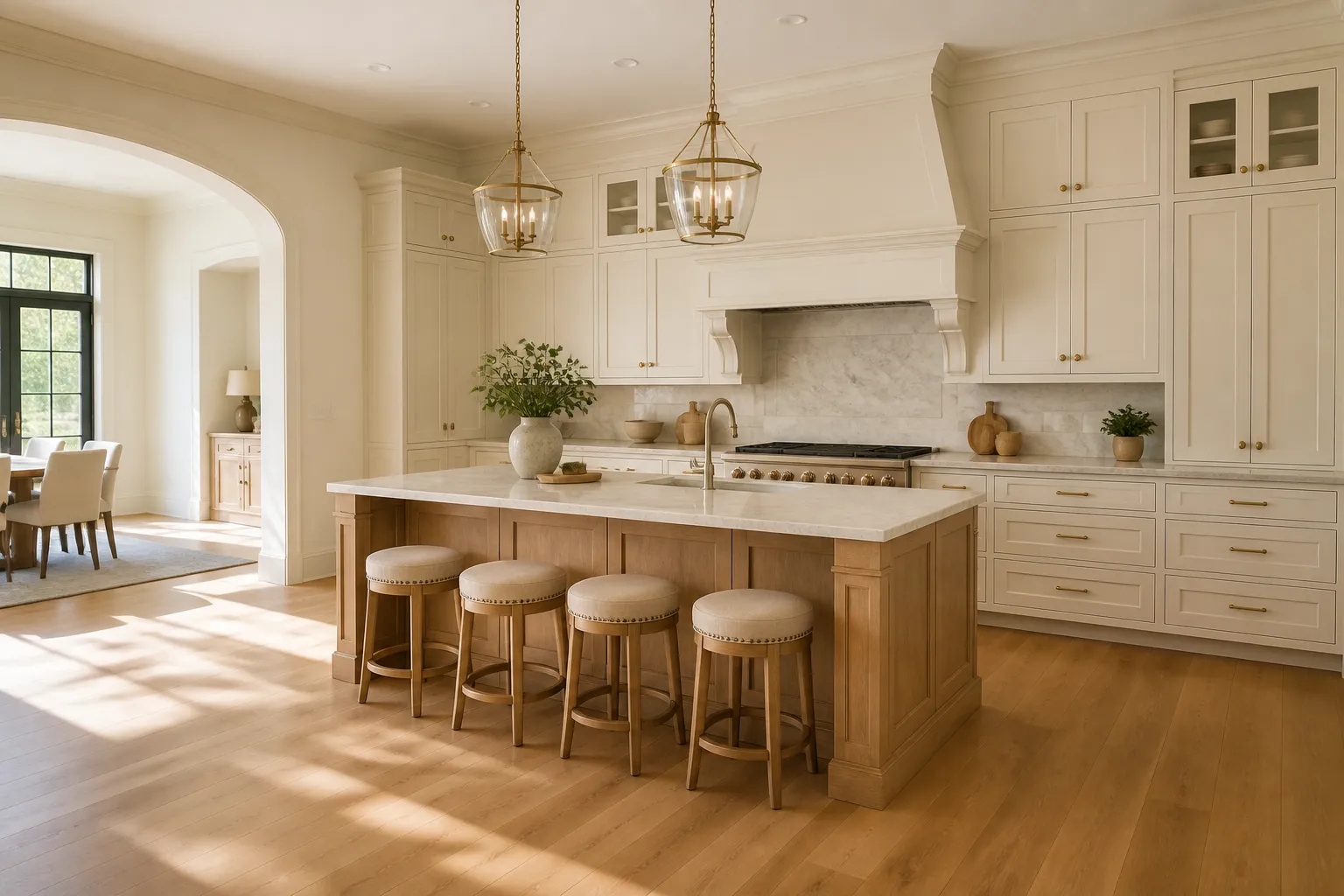
Madison Elite Cabinets quotes in linear feet like everyone else, and it is worth explaining what that hides. A linear foot is one foot of wall covered by cabinetry. Whether that foot holds a drawer bank, a blind corner or a plain door cabinet changes the real cost enormously.
The three tiers and what they run
Stock, roughly $100 to $400 per linear foot
Pre-built in fixed sizes. Fast and inexpensive. The hidden cost is filler panel wherever a wall does not land on a 3-inch increment, which in an older Madison home is most walls.
Semi-custom, roughly $150 to $700 per linear foot
Standard boxes with real choices and some size modification. Most full kitchen remodels land here.
Custom, roughly $500 to $1,200 per linear foot
Built to your dimensions in your material. Worth it for a genuine constraint: an angled wall, a nine-foot ceiling you want used, a run that has to land exactly on a window line.
Installation
Installation typically runs $40 to $80 per hour, or $50 to $300 per linear foot depending on complexity. Crown moulding, inset doors, stone counters templated after install, and any floor out of level push that up.
This is where Madison’s older housing stock shows up in the price. A square 1998 kitchen installs quickly. A 1915 four-square where no wall meets another at 90 degrees does not. Our installation estimates come from a site visit rather than a square-foot formula, because the gap between those two kitchens is days of labour.
Whole kitchen, realistically
A full kitchen remodel including cabinets generally falls between $15,000 and $60,000. Cabinets are usually 30 to 40 percent of that. The spread is mostly layout changes, counters and appliances rather than the cabinets themselves.
Five things that move a quote most
1. Drawers versus doors
A drawer bank costs more than a door cabinet of the same width. More hardware, more parts, more assembly. It is also the upgrade people are most glad they paid for.
2. Ceiling height
Running to a nine or ten foot ceiling adds a stacked row and usually crown. Real storage, real cost. Older homes here often have the height.
3. Finish
Painted costs more than stained in most lines because it needs more preparation and more coats. A specialty colour or a glaze adds more again.
Interior fittings
Pull-out waste bins, spice racks, tray dividers, blind-corner units and soft-close throughout are individually modest and collectively significant. Fittings commonly add 10 to 15 percent.
4. Demolition and disposal
Removing old cabinets, hauling them away and patching what is behind them is real labour. In older homes, plaster repair after removal is routine rather than exceptional.
5. Plumbing and electrical moves
Moving a sink or adding outlets brings in other trades. If the layout stays put, this line disappears entirely.
What the Madison housing stock adds
Two things come up repeatedly in older homes and neither appears on a standard quote template.
Radiators sit exactly where you want a cabinet run and cannot simply be removed. Relocating one is a plumbing job. Building around it needs proper air gaps.
Walls are plaster over lath, which does not hold fasteners like drywall over studs and cracks when you fight it. Budget for some plaster repair.
Where to spend and where not to
Spend on drawer boxes and slides, hinges, the sink base, and anything you open ten times a day. Save on interior finish grade of cabinets nobody opens, decorative end panels on runs you cannot see, and glass doors you will later fill with mismatched glassware.
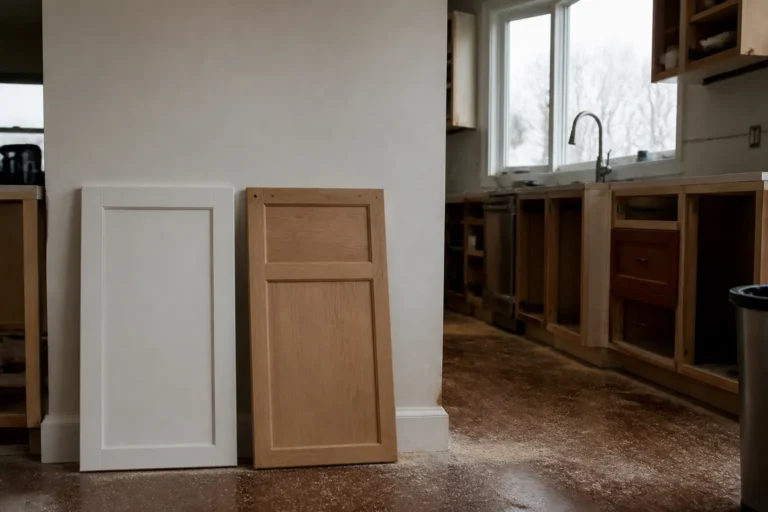
If the boxes are sound and only the doors are dated, neither new cabinets nor custom is the right spend. Refacing or painting changes the look for far less.
Getting comparable quotes
- What is the box material, plywood or particleboard?
- What are the drawer boxes and slides?
- Is demolition and disposal included?
- Is plaster or drywall repair included?
- Who templates and fits the counter, and when?
A contractor who answers these clearly is usually the one to hire, regardless of where the number lands.
Quality claims are easier to compare against a recognised standard. The ANSI/KCMA A161.1 certification programme tests structure, drawers, doors and finish to simulate a lifetime of use.
Common questions
How long does a cabinet order take?
Stock can be days. Semi-custom is commonly four to eight weeks. Custom is eight to twelve.
Is it cheaper to buy cabinets myself and hire an installer?
Occasionally, but you own every measuring error and missing part. Most of the saving disappears on the first return trip.
Do custom cabinets add resale value?
Kitchen work generally returns a meaningful share of its cost, though layout and condition matter more to a buyer than whether the boxes were custom built.
What is the cheapest way to make old cabinets look new?
Paint plus new hardware if the boxes are sound. Refacing if the doors are the problem. Replacement if the boxes are.
Should I remodel in winter or summer?
Lead times are often shorter in winter. Just plan backwards from when you need a working kitchen.
How do I get a real number?
Measure the runs and send a photo. Ranges help with planning and nothing else.
Get a number for your kitchen
We measure, check how square the room is, and itemise cabinets, fittings and installation separately. Call (608) 665-1379.