Madison Elite Cabinets designs, builds and installs custom cabinets for homeowners across Madison, WI. Outdoor kitchens are usually specified for how they perform in July. In Madison, July is the easy part. The design problem is the other seven months — repeated freeze-thaw cycles, snow load, ice, and long stretches where the whole assembly sits soaking wet just above and below freezing.
That cycle is harder on materials than sustained cold ever is.
Why freeze-thaw is the real enemy
Water gets into a joint, a screw hole, or the core of a panel. It freezes, expands roughly nine percent, and widens the gap. It thaws, more water gets in, and it repeats. Madison sees dozens of these cycles each winter, not one long freeze.
Anything that absorbs water loses this fight eventually. That rules out plywood, MDF, particleboard and most residential cabinet construction, no matter what is painted on the outside.
Materials that actually work
Marine-grade polymer (HDPE)
The most reliable choice for Wisconsin. It does not absorb water at all, so freeze-thaw is irrelevant. It is colour-through, so scratches do not reveal a different substrate, and it cleans with soap and water.
Downsides: cost, and a look that is closer to modern than rustic. It also expands and contracts with temperature more than wood does, which good fabrication accounts for with sized fastener holes.
Stainless steel
Durable and appropriate near a grill. Specify 304 grade at minimum. It will show water spots, and it gets genuinely hot in direct summer sun and genuinely cold to the touch in winter.
Masonry with weatherproof doors
A block or stone structure with polymer or stainless doors set into it. This is the most permanent option and integrates with a patio. It also requires a proper footing below frost depth — in the Madison area that is around 48 inches — or the whole structure heaves.
What does not work
Teak or cedar cabinetry will survive but needs annual attention and will grey and check. Powder-coated steel rusts wherever the coating is chipped, and road salt tracked onto a patio accelerates it. Anything with an MDF or plywood core is a two-to-four season purchase.
Our outdoor cabinets are specified around these constraints rather than adapted from indoor lines.
Design decisions that matter more than material
Cover it
A roof, pergola with a solid panel, or deep overhang changes the lifespan of everything underneath it. Snow melting directly onto a counter and running into cabinet seams is what kills outdoor kitchens.
Slope the counter and drain the interiors
A counter with a slight pitch away from the cabinet faces sheds meltwater. Cabinet floors should have weep holes — water will get in, so plan for it to leave.
Keep it off the ground
Cabinets sitting directly on a patio sit in standing snowmelt and ice all winter. A raised base, even two inches, makes a difference.
Plan the plumbing for winterising
If there is a sink, the supply line needs a shutoff and a drain point inside the heated envelope of the house. A line that cannot be drained will split. This is the single most common expensive failure in Wisconsin outdoor kitchens.
Closing it down for the season
- Drain and blow out any water lines; leave valves open.
- Disconnect and store the propane tank outdoors, upright, away from the house.
- Empty and clean the cabinets — anything left inside will freeze or attract mice.
- Cover the grill and any appliance, but use a breathable cover rather than sealed plastic, which traps condensation.
- Leave cabinet doors latched but not sealed so air can move.
Is it worth it in a five-month climate?
That is a fair question and the answer is personal. What tips it for most Madison homeowners is having a covered space — once there is a roof, the season stretches into April and October, and the kitchen stops being a summer-only purchase. Without a cover, the honest recommendation is often a good grill and a weatherproof storage cabinet rather than a full built-in.
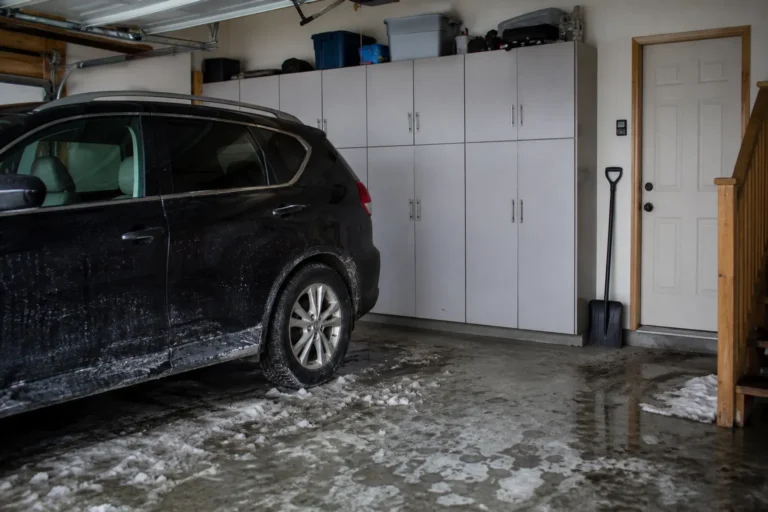
The same logic applies to a garage setup, where the storage is the point and the finish is not.
Frequently asked questions
Can I use indoor cabinets under a covered porch?
No. Covered is not conditioned. Humidity and freeze-thaw still reach them.
How deep does the footing need to be?
Below the local frost line — around four feet in the Madison area. Anything shallower will move.
Will a refrigerator survive outside in winter?
Only an outdoor-rated one, and most should be emptied and shut off for the season regardless. Check the manufacturer’s minimum ambient temperature.
What is the most common regret?
Not enough counter space beside the grill, and no cover. In that order.
Plan it for the winters, not the summers
We will spec an outdoor kitchen around what Madison weather does to it. Call (608) 665-1379 for a free consultation.